
Look out for changes at mealtimes
Book a check if bad breath does not go away, or if your pet drools, drops food, chews differently, has loose teeth or eats less than usual. Bleeding, swelling or obvious pain around the mouth needs prompt veterinary advice. Be gentle and careful when looking: even a familiar, friendly pet may bite when in pain.
Take tooth brushing one step at a time
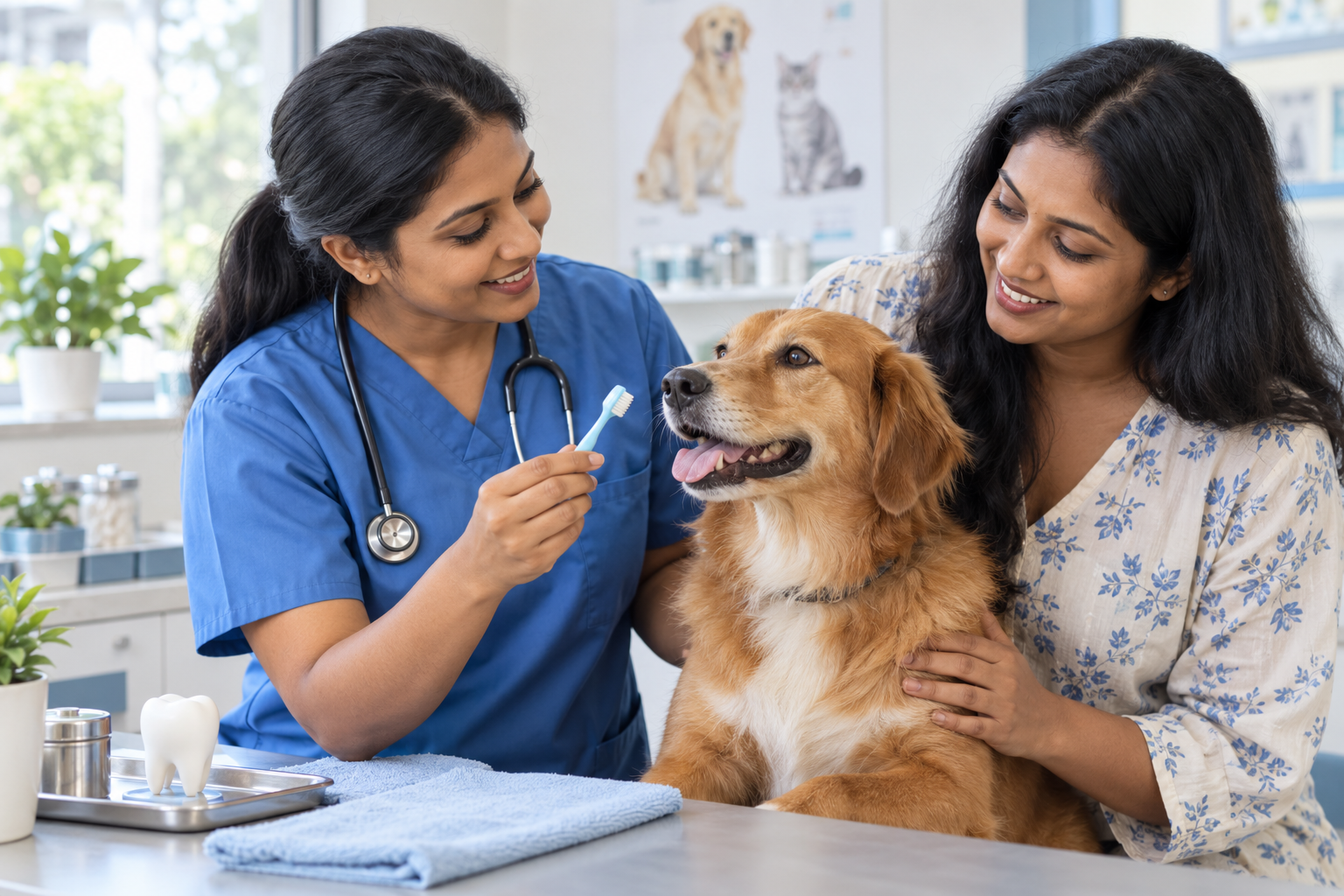
If you are unsure how to brush your pet’s teeth, ask your vet to show you and suggest suitable dental products. Let your pet get used to having their mouth handled gradually, then aim for daily brushing once they are comfortable with it. If their mouth seems sore, have it checked before trying to brush.
Talk through any treatment your pet needs
Brushing at home helps, but your pet still needs dental examinations. Some problems sit below the gumline, where you cannot see them. If your vet recommends a dental procedure, ask what it involves, why anaesthesia may be needed, how much it is likely to cost and what care your pet will need afterwards.
General education for dogs and cats; not a diagnosis or an individual treatment plan.