
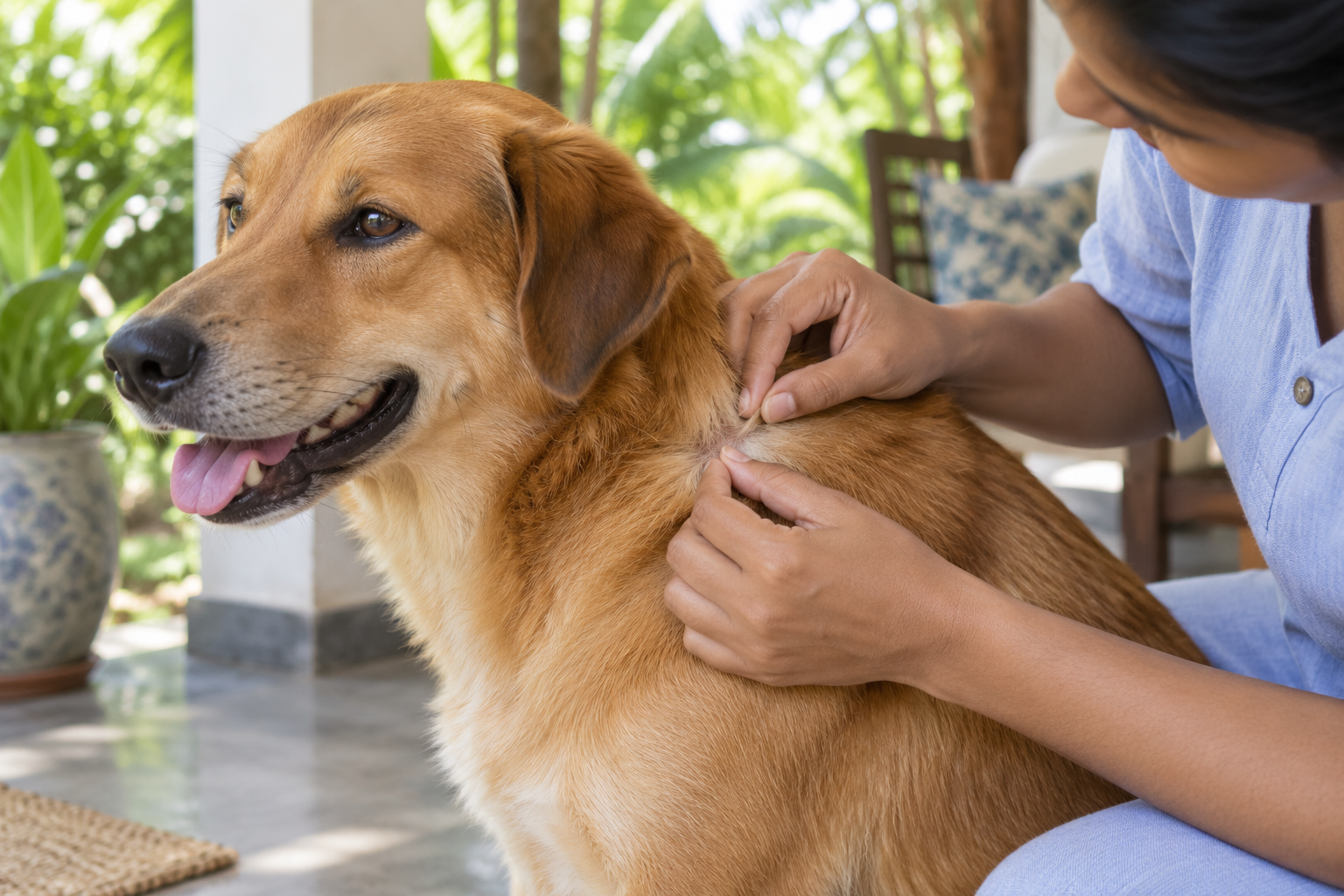
Have a quick look after time outdoors
After a walk or some time in the garden, gently check your pet’s coat and skin. Look around the ears and neck, and between the toes too. Notice whether they are scratching more than usual, have irritated skin or have any ticks or fleas you can see. If you find a tick and are unsure how to remove it, ask your vet for help.
Choose a treatment that suits your pet
- Ask for a product that suits your pet’s species, age, weight and health. Never use a product meant only for dogs on a cat.
- Tell your vet about any medicines your pet takes or reactions they have had before. Mention if your pet is pregnant or feeding puppies or kittens.
- Follow the label and your vet’s instructions. Do not give the next treatment early or use several products together without advice.
- If you use a spot-on treatment, follow the instructions about keeping pets apart. They must not lick the treatment off each other.
Remember their bedding and resting places
Clean your pet’s bedding and favourite resting spots regularly. If you have more than one pet at home, ask your vet for a plan for each of them. The same product may not be safe for every animal in the house.
Speak to your vet if your pet seems unwell
If your pet seems unwell or has a reaction after a treatment, contact your vet promptly. Keep the packaging so the vet can see exactly what was used. Finding a tick does not, on its own, mean your pet has “tick fever”. Your vet needs to assess them to find out what is wrong.
General education for dogs and cats; not a diagnosis or an individual treatment plan.